-
 Call Now ! +91-9105912123
 -
 Email Now kumaonmiet@gmail.com
27 Aug 2026
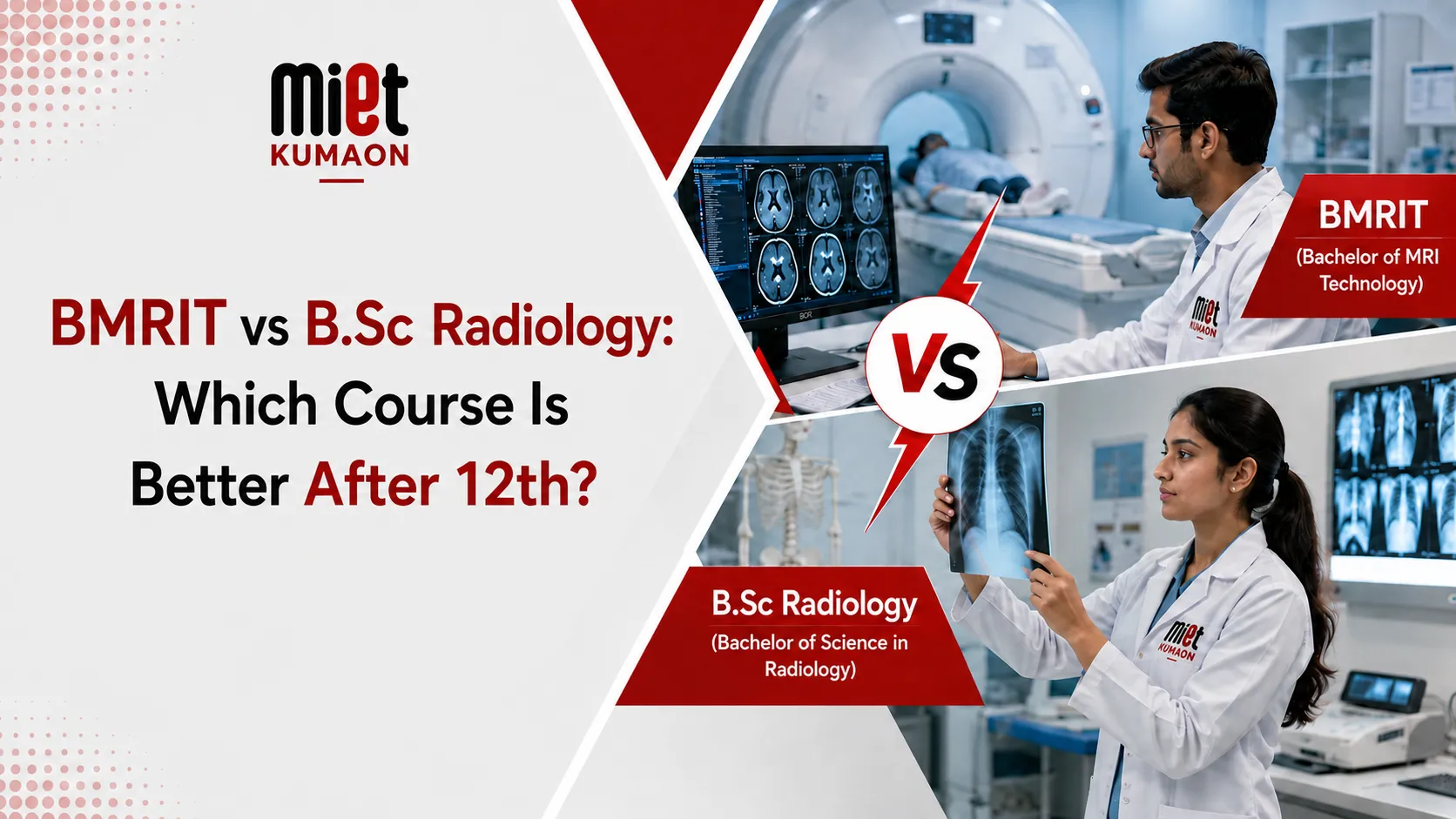
Choosing the right healthcare course after Class 12 can feel confusing, especially for students who are interested in medical imaging, radiology, and diagnostic technology. BMRIT vs B.Sc Radiology is one of the most common comparisons students make while exploring career opportunities in the healthcare sector. Although both courses are connected to medical imaging, they can differ in terms of curriculum, practical training, course structure, and career pathways.
Before making a decision, students should understand what each course offers and which option is better suited to their interests and career goals. If you are planning to pursue a BMRIT course after 12th, comparing these programs can help you make a more informed choice rather than selecting a course based only on its name.
For students in Haldwani and the Kumaon region, MIET Kumaon offers the Bachelor of Medical Radiology and Imaging Technology (BMRIT) program with a focus on building both academic understanding and practical knowledge. The course is designed to help students learn about different areas of medical imaging and understand how imaging technology is used in healthcare settings. Along with classroom learning, practical exposure plays an important role in helping students develop a better understanding of the field.
By exploring the difference between BMRIT and B.Sc Radiology, students can better understand which course matches their future goals and make a more confident decision about their career in medical imaging.
|
Factor |
BMRIT |
B.Sc Radiology |
|
Full Form |
Bachelor of Medical Radiology and Imaging Technology |
Bachelor of Science in Radiology |
|
Main Focus |
Radiology and medical imaging technology |
Radiology and medical imaging |
|
Course Duration |
3.5 years at MIET Kumaon |
Varies by institution |
|
Eligibility |
10+2 PCM/PCB with required marks |
Varies by institution |
|
Practical Training |
Included in the program at MIET Kumaon |
Depends on institution |
|
Areas of Learning |
X-ray, CT, MRI, imaging techniques and related subjects |
Varies according to curriculum |
|
Career Scope |
Hospitals, diagnostic centres and imaging departments |
Depends on qualification and institution |
|
Suitable For |
Students interested in medical imaging technology |
Students interested in radiology-related studies |
Note: The course duration, eligibility criteria, and curriculum for B.Sc Radiology may vary from one university or college to another. Students are advised to check the latest course details and admission requirements of the institution they are considering before making a decision.
BMRIT (Bachelor of Medical Radiology and Imaging Technology) is an undergraduate healthcare program designed for students who are interested in medical imaging and radiology technology. The course helps students understand how different imaging techniques and equipment are used to support diagnosis and patient care in healthcare settings.
During the program, students can learn about areas such as X-ray, CT scan, MRI, ultrasound fundamentals, radiation safety, patient positioning, and different imaging procedures. The course focuses on developing both theoretical understanding and practical knowledge, helping students become familiar with the technologies and processes used in medical imaging.
For students searching for a BMRIT college in Haldwani, MIET Kumaon offers a 3.5-year BMRIT program that includes a 6-month integrated internship. This structure allows students to gain academic knowledge while also getting practical exposure and a better understanding of how medical imaging is applied in professional healthcare environments.
B.Sc Radiology is an undergraduate program related to radiology and medical imaging. It is designed for students who are interested in understanding imaging techniques and the role of radiology technology in modern healthcare. Depending on the institution, the course may cover both theoretical concepts and practical aspects of medical imaging.
However, the exact course structure, duration, eligibility criteria, subjects, and practical training opportunities can vary from one college or university to another. This is why students should not rely only on the course name while making their decision.
Students considering B.Sc Radiology after 12th should carefully review the latest curriculum, course duration, eligibility requirements, and practical training offered by their preferred college or university before applying.
The biggest difference between BMRIT and B.Sc Radiology may not always come down to the course name alone. In many cases, the real difference lies in the curriculum, practical training, clinical exposure, and overall learning experience provided by the institution.
This is why students should look beyond the course title and carefully compare what each program actually offers. Checking the subjects, practical facilities, internship opportunities, and exposure to real healthcare environments can help students understand which course is better suited to their interests and career goals before making a final decision.
BMRIT generally focuses on medical imaging technology and the practical aspects of diagnostic imaging. Students may learn about imaging procedures, equipment, patient positioning, radiation safety, and different medical imaging techniques.
B.Sc Radiology, on the other hand, may have a broader or institution-specific curriculum related to radiology and imaging sciences. The subjects and level of practical training can vary depending on the college or university offering the program.
Practical training is an important part of preparing for a career in medical imaging. Students need to develop familiarity with imaging equipment, procedures, patient positioning, and safety practices along with their theoretical knowledge.
At MIET Kumaon, the BMRIT program includes practical exposure along with a 6-month integrated internship, helping students gain a better understanding of the practical side of medical imaging and healthcare environments.
The BMRIT program at MIET Kumaon is 3.5 years in duration, including the 6-month integrated internship.
The duration of B.Sc Radiology can vary depending on the institution and the specific program structure. Students should always check the latest course details provided by their preferred college or university.
Graduates in the field of medical imaging can explore career opportunities in hospitals, diagnostic centres, radiology departments, and other healthcare imaging facilities.
Depending on their qualification, skills, practical training, and experience, BMRIT graduates may explore opportunities in areas such as:
BMRIT can be a suitable option for students who are interested in healthcare, medical technology, and diagnostic imaging. The course may particularly appeal to students who want to understand how modern imaging technologies are used in hospitals and other healthcare settings.
Students who may consider BMRIT include those who:
However, choosing the right course should not depend only on the course name or career options. Students should also carefully consider factors such as college affiliation, practical training facilities, internship opportunities, faculty, curriculum, and the overall learning environment.
For students exploring BMRIT in Haldwani, MIET Kumaon offers a program that combines academic learning with practical exposure and an integrated internship. Reviewing the complete course structure can help students understand whether the program matches their interests and future career goals.
Students planning BMRIT admission at MIET Kumaon should first make sure they meet the eligibility requirements specified for the program.
To apply for the BMRIT course at MIET Kumaon, students must have completed 10+2 with either PCM or PCB and secured a minimum of 45% marks. This makes the program a relevant option for students from both Mathematics and Biology backgrounds who are interested in medical imaging, radiology technology, and the healthcare sector.
Before applying for admission, students should always check the latest eligibility criteria and admission guidelines directly with MIET Kumaon. Course requirements and admission rules may be updated from time to time, so verifying the current information can help students make a well-informed decision before applying.
For students looking for a BMRIT course in Haldwani, MIET Kumaon offers a focused undergraduate program in medical radiology and imaging technology. The program is designed for students who want to build their understanding of diagnostic imaging through a combination of academic learning and practical exposure.
Some key features of the BMRIT program at MIET Kumaon include:
These features can help students gain a better understanding of medical imaging technology and its practical role in healthcare. Before taking admission, students should review the latest program details, eligibility requirements, and admission guidelines provided by MIET Kumaon.
 Career Scope After BMRIT
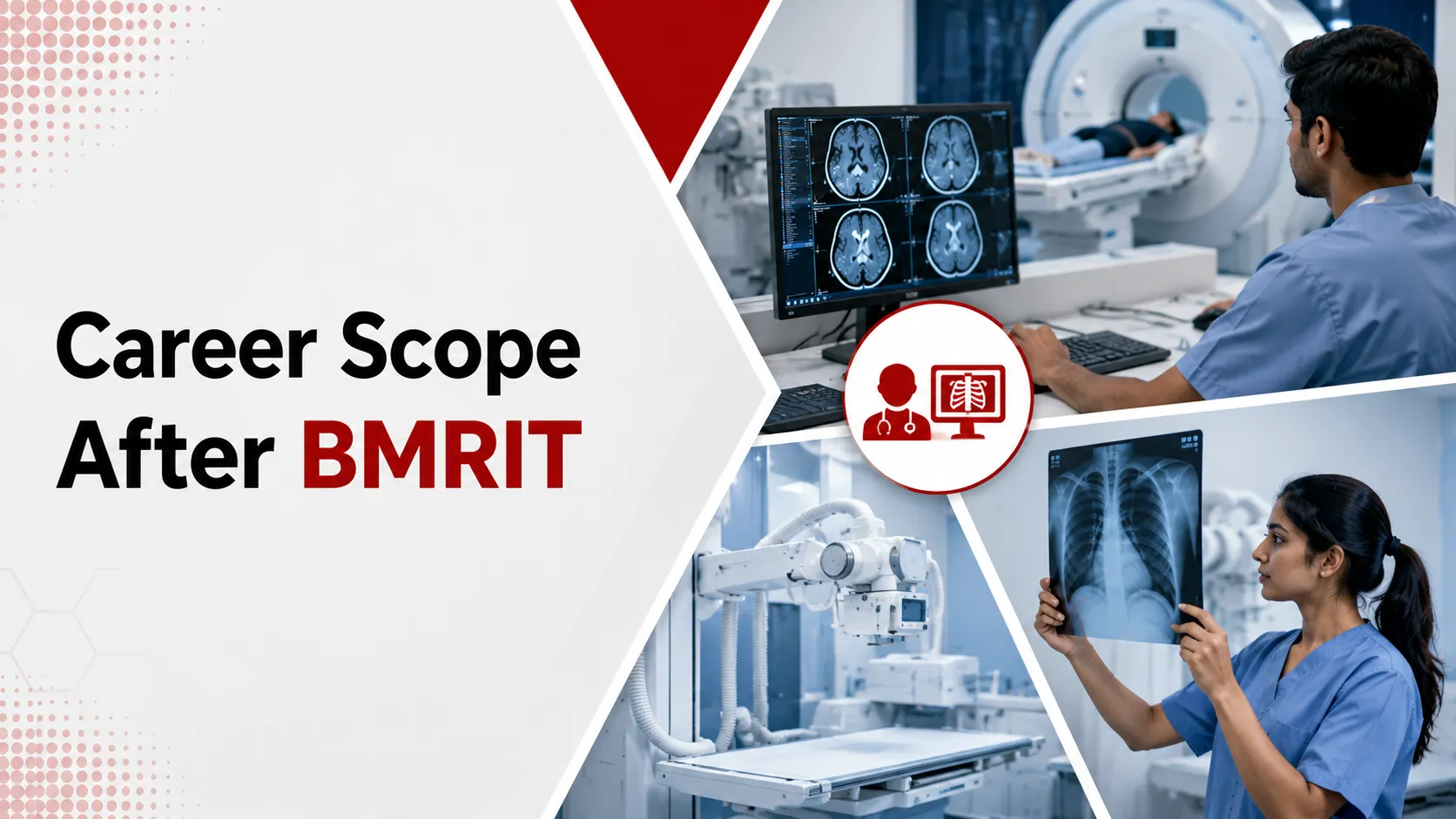
After completing a BMRIT degree, graduates can explore career opportunities in healthcare organizations, hospitals, diagnostic centres, and medical imaging facilities. The field of medical imaging offers different roles depending on a graduate’s qualifications, practical skills, professional training, and the requirements of the healthcare organization.
Possible career roles include:
Radiology technologists work with medical imaging procedures and equipment as part of their professional responsibilities. Their role may include assisting with imaging procedures, preparing patients, positioning them appropriately, and following established safety and operational protocols.
They also need to work carefully with imaging equipment and follow the procedures set by the healthcare facility. Proper communication, technical knowledge, and attention to safety are important aspects of working in a medical imaging environment.
X-ray technologists assist with X-ray imaging procedures in healthcare settings. Their responsibilities may include preparing patients for the procedure, helping with appropriate positioning, operating imaging equipment according to their training, and following established radiation safety practices.
They also work as part of the healthcare team to ensure that imaging procedures are carried out carefully and according to the protocols of the facility. Good technical knowledge, attention to detail, and patient communication are important parts of the role.
With relevant training, practical experience, and depending on employer requirements, BMRIT graduates may explore opportunities in CT imaging departments. Their work can involve assisting with CT scan procedures, preparing patients, positioning them appropriately, and supporting related imaging processes.
Working in a CT department also requires familiarity with imaging equipment, safety procedures, and the protocols followed by the healthcare facility. The specific responsibilities may vary depending on the employer, workplace, and level of professional training.
Graduates with appropriate training and experience may explore opportunities in MRI departments, depending on the requirements of the healthcare facility and employer. The role involves working with MRI imaging technology and supporting imaging procedures as part of a healthcare team.
Professionals working in MRI environments need to follow established safety procedures, understand the basic principles of MRI technology, and ensure that patients are appropriately prepared for the procedure. Specific responsibilities can vary based on the workplace, training, and professional requirements.
BMRIT graduates can explore opportunities in diagnostic centres, hospitals, and other healthcare organizations that have medical imaging departments. Depending on the organization and the role available, they may work as part of a larger medical imaging and healthcare team.
Career opportunities can vary based on a graduate’s qualifications, practical skills, training, experience, employer requirements, and applicable professional regulations. The responsibilities of a role may also differ from one healthcare facility to another.
Students can prepare for future opportunities by developing strong technical knowledge, improving their understanding of imaging procedures, and gaining practical exposure during their academic training. Building professional skills and staying updated with developments in medical imaging can also support their long-term career growth.
For students interested in medical imaging, radiology technology, and the healthcare sector, BMRIT can be a relevant undergraduate course option after Class 12. The program combines knowledge of medical imaging with practical learning, helping students understand the role of imaging technology in modern healthcare and diagnostic procedures.
The course may be worth considering for students who are interested in working with imaging technologies and want to build a career in diagnostic imaging environments. However, choosing the right course should always depend on a student’s personal interests, career goals, and preferred area of specialization.
Before taking admission, students should carefully compare important factors such as the curriculum, practical training, internship opportunities, college affiliation, learning environment, and possible career opportunities. Taking time to understand these aspects can help students choose a program that is better aligned with their future goals.
There is no universal answer to whether BMRIT or B.Sc Radiology is better. The right choice depends on the student’s interests, career goals, and the specific curriculum and practical training offered by the institution.
Students who are primarily interested in medical imaging technology and practical radiology training may consider BMRIT as a relevant option. However, it is important to compare the complete course structure, subjects, internship opportunities, practical exposure, affiliation, and future career pathways before making a final decision.
For students searching for BMRIT admission in Haldwani, MIET Kumaon offers a structured 3.5-year BMRIT program that includes a 6-month integrated internship along with practical exposure. This combination can help students build both academic knowledge and a better understanding of medical imaging practices.
Ultimately, the best course is the one that matches your interests, learning preferences, and long-term career goals. Taking time to compare both options carefully can help you make a more informed admission decision.
Find answers to common questions about Uttarakhand Board Result 2026.
BMLT is becoming a popular healthcare career due to growing demand for skilled m...
Read More →
Choosing the best course after 12th is an important decision for your future. Le...
Read More →
Discover the career opportunities in physiotherapy for Uttarakhand students, inc...
Read More →
Discover the best medical imaging courses in Haldwani, including BMRIT, with det...
Read More →
Discover the best private nursing college in Haldwani offering quality e...
Read More →Apply now to secure your future with world-class education, expert faculty, and industry-focused programs designed for success.